
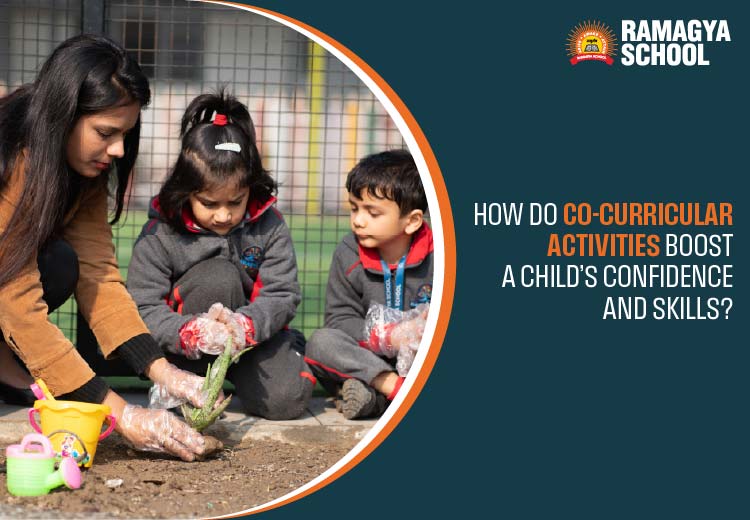
Every parent hopes that their child grows into a young adult feeling confident, satisfied and able to complete things independently. Achieving good marks is great however, marks aren’t solely what can help children succeed in their life. Participating in activities that are fun outside of the classroom can help children learn important aspects. This is why co-curricular activities are extremely special.
These help children discover their interests, express their emotions, and also learn things that books cannot teach. Let’s understand how these activities help children feel confident and learn life skills.
What Are Co-Curricular Activities?
These activities are enjoyable learning activities children can participate in along with their studies. These activities help children learn in different ways. They include:
- Games and sports
- Dance, music and art
- Theatre and speaking on stage
- Competitions, clubs and school events
These activities go together with the classroom and help children in becoming happy and content.
Builds Confidence Through Participation
When kids participate in activities they try something completely new. Being on the stage, playing games or talking in front of a crowd might initially be intimidating, however, as time passes it gets easier. At a certain point the children:
- You will feel more confident
- Learn not to be afraid of people
- Be proud and happy of themselves
In schools such as Ramagya School, children are slowly encouraged to take part in activities. This helps them build confidence slowly, naturally, and without any pressure.
Improves Communication Skills
Activities like drama, group work, music, and speaking games help children learn better. They are taught to speak well, listen to others and talk about how they are feeling. These games aid children in:
- Be confident in your words
- Say what they think clearly
- Use appropriate body language and words
These abilities help children not only in the classroom, but throughout their lives.
Helps Discover Talents and Interests
Every child is unique. Some kids love running and playing, while some like drawing, and some prefer to be the leaders. Activities that are co-curricular help children to:
- Find out what they like to do
- Be aware of what they excel at
- Develop skills that they truly enjoy
This makes learning more fun and enjoyable for children.
Teaches Teamwork and Discipline
If children are playing or working with others, they learn to be nice and work in a team. They know that doing things together as a team is essential. Children learn:
- Helping others and sharing knowledge
- Be respectful of your friends
- Being responsible and following rules
At Ramagya School, all activities are planned out in a clear method so that the children are taught these values by regular activities.
Builds Problem-Solving and Decision-Making Skills
Fun games and challenges help children think rapidly. They learn how to pick the right option, keep trying and not skip the challenge. The following activities are designed to aid children in:
- Think about it on their own
- Stay calm during challenges
- Learn from your mistakes
These little lessons can aid children in handling real-world situations as they mature.
Improves Physical and Mental Well-Being
Playing, running and sports keep children active and healthy. Music, drawing and artistic work can make children feel relaxed and content. Regular activities for children help:
- Keep fit and active
- Feel less overwhelmed
- Focus more effectively
A well-balanced body helps the mind develop better.
Encourages Leadership and Responsibility
If children are given small tasks such as leading a group or participating in an event, they feel valued. They learn slowly:
- How to guide other people
- How to make small-scale decisions
- How to take responsibility
Schools that provide such opportunities allow children to grow into responsible and caring individuals.
Supports Academic Learning
Children who participate in activities typically have better results in their academics, too. Activities help children stay focused, follow a schedule, and keep track of time. This balance aids children in:
- Feeling encouraged
- Using time wisely
- Taking advantage of learning more
It is the reason such activities are a crucial element of education.
How Ramagya School Encourages Overall Growth
The children at Ramagya School are encouraged to develop in every aspect beyond reading books. They participate in celebrations of festivals, sports as well as in multiple workshops that allow them to learn new things. These activities aid children in building trust, cooperation, and life abilities.
The school has modern classrooms, well-equipped laboratories, and specialized activities areas that allow children to learn through play. Students also get to participate in 35+ sports through Ramagya Sports Academy, which ensures they stay physically active, disciplined and resilient. A healthy and happy atmosphere helps kids enjoy their schooling while developing into competent and confident individuals.
Final Thoughts
School isn’t only about grades. It’s about learning confidence and having a positive attitude. The cocurricular programs help children develop into mature, well-rounded people who are prepared to take on the world.
When schools promote both academics and other activities, children become happier, stronger and more confident.
FAQs
- What is the importance of co-curricular activities for children?
They aid children in feeling confident, speak more clearly and develop their imagination. They also assist children in learning things that go beyond the pages of books.
- Do extracurricular activities affect students’ academic performance?
Yes, but in a positive way. They assist children to focus more effectively, adhere to routines and keep track of time, which aids in studying.
- At what age should children start participating in after school programs?
Children can begin very young by engaging in simple activities. Making the effort to try new things early can help to build confidence.
- Are extra curricular activities helpful in building a great future?
Yes! When students play, do art, or even lead a group, they learn to work with friends, speak clearly, and solve problems. These skills help them in school and later at work.