
How to Prepare for Class 12 Board Exams Without Coaching?
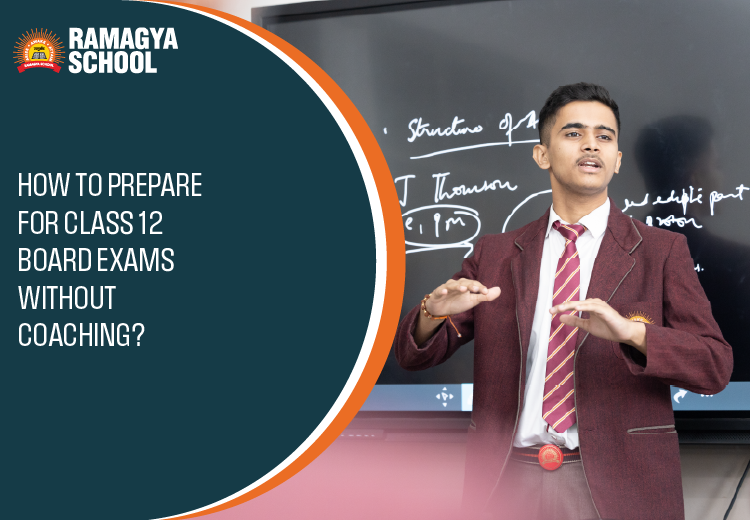
Class 12 is one of the most crucial years of a student’s school life. As the boards are approaching, students are under pressure to score well, finish the syllabus on time and make future plans. During this time, one question that is often asked is “Can I prepare for Class 12 board exams without coaching?”
Yes. You can get good marks without expensive coaching or extra tuition. With a good study plan, good time management and regular practice you can prepare for your Class 12 board exams from home. Self-study means you can learn at your own pace. You can spend more time on difficult subjects and revise when you need to.
If you are planning to prepare without coaching, here are a few simple tips that will help you.
1. Know the 12th Class Syllabus in Detail
Before you start, get yourself familiar with your syllabus. Many students study randomly not even knowing which are the important chapters and how much they have to cover. First of all check the latest syllabus released by your board whether it is CBSE, ISC or any state board.
What to do:
- Download latest syllabus of all subjects
- Complete list of all chapters and topics
- Study the exam pattern and marking scheme
- Know which chapters are easy and which are tough
- Track topics you have completed
2. Design a practical study schedule
The good thing about training without a coach is that you can create your own schedule. A time table is only of any use if you stick to it. Don’t create one that requires 10-12 hours a day of study. Create one that matches your class schedule, energy levels, and learning style.
Sample Daily Schedule for Class 12 Students
| Time | Activity |
| 6:30 AM – 7:00 AM | Revise previous topics |
| 8:00 AM – 2:00 PM | School |
| 3:00 PM – 4:00 PM | Rest and Refresh |
| 4:00 PM – 5:30 PM | Study a difficult subject |
| 5:30 PM – 6:00 PM | Break/Outdoor Activity |
| 6:00 PM – 7:00 PM | Homework/Practice Questions |
| 9:00 PM – 10:00 PM | Revision or Sample Papers |
It is better to concentrate fully for a few hours than to sit with books the whole day and understand nothing.
3. Concentrate on NCERT Books
If you are preparing for CBSE boards, then the first step is NCERT textbooks. Many students purchase numerous reference books assuming that more books will result in better preparation. BUT too many books can be confusing.
“First understand the concepts of your NCERT text book.
How to study NCERT in a proper way:
- Read all the chapters thoroughly
- underline important definitions and equations
- Do examples in the book
- Do the exercises at the end of every chapter.
- Repeat difficult ideas
4. Prepare Previous Year and Sample Papers
Practicing previous year question papers is one of the best ways for preparation without coaching. They show you how the questions are asked and how to manage your time in the real exam. You can also see which topics require more attention.
Advantages of solving Previous Year Papers
- You are aware of the pattern of the exam
- You write faster
- You feel more confident about tests
- You learn to manage your time
- You get used to different types of questions
5. Short notes for fast revision
“Imagine if you had a few days before your boards and you had to revise an entire book. That sounds stressful, right? Short notes are useful here. You can refer back to your own notes and not have to read through every chapter again.
Your notes should include:
- Important formulas
- Definitions of key terms
- Dates & Occasions
- Charts and diagrams
- Concepts
- Common pitfalls
For example, Chemistry. You might have a separate notebook for formulas and reactions. In History you can create timelines to help you remember events. Keep your notes simple and easy to read.
6. Use Internet Resources Wisely
If you are training without a coach, you are not alone. You have educational video, online lectures, practice questions and digital study material these days. If a topic is difficult, watch an explanation on the internet and then do practice questions on it.
Also Read:- 10 Co-Curricular Activities That Develop Leadership Skills | Ramagya School Blog
But don’t switch too often between too many teachers and apps. Choose some good resources which are according to your board syllabus. If you have any doubts you can also ask your school teachers.
7. Pick the Correct Revision Technique
Once the syllabus is done, that is not enough. But you have to revise regularly otherwise it is difficult to remember what you studied weeks or months back. It is so much easier with a simple way of revising.
Give the 3-Step Revision Process a Try
Step 1: Daily Review. Spend 20 to 30 minutes reviewing what you studied that day.
Step 2: Weekly revision. After every week you should revise the chapters done and practice a few questions.
Step 3: Monthly revision. Test yourself on the topics covered in the month.
It helps to know the weak areas before the exam. You could also use your study timetable to assign days to revise each subject.
8. Avoid Common Mistakes
Sometimes they study hard, but they have a hard time because of the little slip-ups. Steer clear of these:
- Start with the tough topics: Start your day with the tough subjects early
- Just reading is not enough: Writing down the answers and solving the questions is equally important
- Don’t ignore the weak ones: Spend more time on the topics that you need to work
- Studying without breaks: Take short breaks to keep your focus
- Comparing yourself with others: Focus on your own learning and progress
9. Test Yourself Again and Again
How do you know when you’re really ready? Simple: test yourself. You don’t have to wait for the school exams to see how well prepared you are. Fix a time in a week for chapter wise tests or numericals or writing practice.
After each test, ask yourself:
- Which questions did I get right?
- Where did I get points taken off?
- What subjects require more practice?
- Did I finish the paper on time?
I’m going to try to make this as clear as I can. How I’m going to do this is. Self-testing is one of the most useful self-study habits; it tells you where you are and what to improve.
Conclusion
Yes, it is possible to prepare for Class 12 boards without coaching. But the most important thing is how often you study and how well you study.
“Know your syllabus, make a realistic time table, follow books and practice previous year papers. Remember, boards are not about how many hours you study, but how well you comprehend and apply what you learn.
With a good time-table, some helpful preparation tips and regular self-study, you can gain confidence and prepare well without depending on coaching entirely. Be consistent, ask questions when you need help and try to improve a little bit every day.
Frequently Asked Questions (FAQs)
1. Can I score 90% and above marks in class 12 board exams without coaching?
Yes, you may. Clear concepts, regular revision, textbook practice and solving previous year papers can fetch good marks. It’s how you prepare and how you play that determines the outcome.
2. How many hours a day should a class 12th student study without coaching?
“No one has a number. Depending on your subjects, homework load and how you learn, a good starting point for focused self study outside of school is 3-4 hours. Quality and consistency are more important than long hours.
3. Are NCERT books sufficient to prepare for Class 12 board exams?
CBSE students need to study from NCERT books as they form a strong foundation. and you should do the official sample papers and previous year questions and other material your teachers suggest.
4. When should I start preparing for the 12th board?
Preferably from the beginning of the Academic Session This gives you enough time to understand the concepts, complete the syllabus, revise regularly and practice sample papers without any pressure.
5. How to prepare for board exams of class 12?
Refer to the short notes, important formulas, chapter wise questions and sample papers again and again. Spend more time on the hard topics, but still review the ones you already know well.