
The Hidden Impact of Excessive Screen Time on Children
“Just five more minutes, please.”
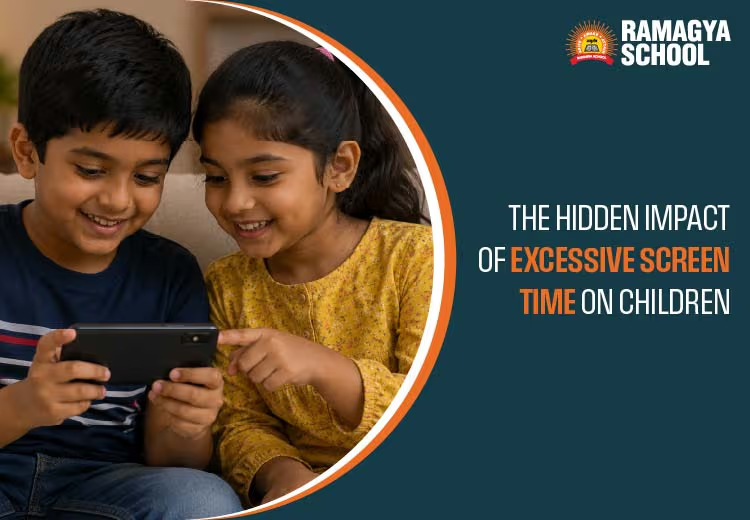
Many parents hear this every day. A child is watching cartoons, playing a game, or scrolling videos, and the screen looks more interesting than toys, books, food, sleep, or even outdoor play. At first, it feels harmless. The child is quiet, busy, and happy. But slowly, too much screen time can start affecting the child in ways parents do not notice immediately.
Screens are now a part of life. Children use them to study, for entertainment videos, learning, and games. The aim isn’t getting rid of screens altogether. It is to utilize screens in a responsible manner and learn how to reduce screen time in a calm and effective manner.
If children can find a proper balance, they will take advantage of technology, while still having for play, sleep, family, reading, creativity and real-world learning.
Why Excessive Screen Time is a Concern
A lot of screen time can change children’s routine, health, development, learning, and behaviour. The effects may not be noticed within a single day, however, over time, parents may be able to observe shifts in sleep patterns, mood, focus, and the amount of their physical activities.
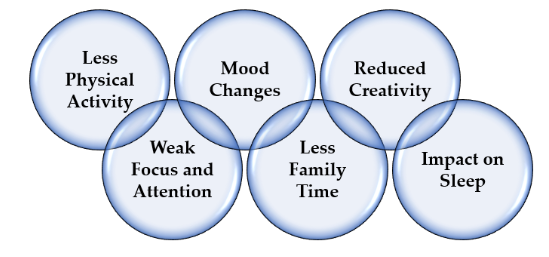
- Less Physical Activity
If children spend a lot of hours on screens, they sit for lengthy durations of time. This hinders their playing, running, outdoor movement, essential for good growth.
- Weak Focus and Attention
Fast videos and quick games can make children used to instant entertainment. This can make reading, writing, homework, or classroom learning feel slow and difficult.
- Mood Changes
Children can become frustrated, agitated or irritable when screens are removed. This is the case when screen usage develops into a regular habit.
- Less Family Time
A lot of screen time can hinder conversations, playing, eating, and spending time with your family. Children require real conversations and bonds for emotional development.
- Reduced Creativity
If screens will keep kids busy all day long they have less time to think, draw, create, or play freely. Free play is very important for creative thinking.
- Impact on Sleep
Sleep is essential for kids. It assists in the growth of their body, their brain rest, and in keeping their mood up.
If kids are on screens for long periods of time particularly before bedtime, it might even be more difficult to fall asleep. Bright screens and fast-moving video can stimulate the brain. The child might feel tired however, the brain stays active.
Children who aren’t getting enough sleep may be unhappy, exhausted, distracted, and less active the next day.
Impact on Eyes and Body
Long time spent on screens can cause children’s eyes to feel dry or tired. They may blink less while watching the screen. Being in one spot for a long period of time could affect posture and physical exercise.
Children need running, climbing, jumping, playing, and moving. These activities improve the bones, muscles, balance, and fitness. If screen time takes over playtime, children can become less active.
Impact on Focus and Learning
Quick games, fast videos, and short clips make children used to quick entertainment. After that, simple activities like reading, writing, drawing, or listening to a teacher can feel slow.
A lot of screen time can affect attention span. Children may have difficulty being able to concentrate to complete tasks, or concentrate on a particular task for longer periods of time.
Real learning needs patience. It needs listening, asking questions, trying, and thinking. Screens should support learning, not replace it.
Impact on Emotions and Behaviour
Some children become irritated when screens are taken away. Some cry, shout, or refuse to do other activities. This happens because the screen becomes a habit. Excessive screen time can also affect mood.
Children may feel restless, bored easily, or less interested in normal play. They may start wanting the phone or tablet again and again. This is why parents need to create healthy screen habits early.
Impact on Social Skills
Children learn social skills by talking, playing, sharing, waiting, listening, and spending time with family and friends. Too much alone time with a screen means less opportunity for a child to practice these skills.
Things like making eye contact, talking clearly, feeling and playing with others are important for growth.
How To Reduce Screen Time Gently
Cutting down on screen time should be done slowly and with patience. Children might not give up screens in a day. Parents should help them with love, patience and care.
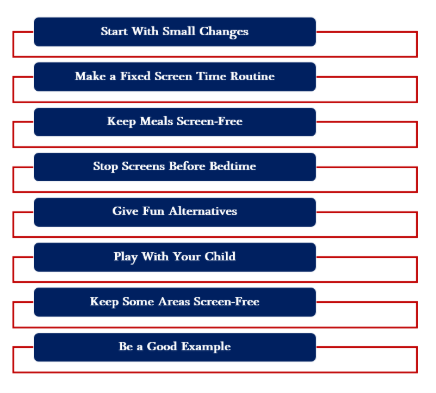
- Start With Small Changes
Do not stop screen time suddenly. Start with small adjustments like reducing 10 to 15 minutes daily. This helps children adjust without feeling upset.
- Make a Fixed Screen Time Routine
Set a proper time to use screens every day. When children know that they can play or use screens they will ask for it a little less.
- Keep Meals Screen-Free
Try to avoid using cell phones, tablets, computers, and television during meal time. This is an opportunity for the whole family to spend some time together and family discussions might not seem boring.
- Stop Screens Before Bedtime
Make sure to keep screens off for at least an hour before sleeping. You can replace them with stories for bed, soft music, quiet play to help children sleep better.
- Give Fun Alternatives
Activities like coloring puzzles, storybooks, blocks clay and dance and sports or board games. The kids need something exciting to keep them entertained instead of glued to screens.
- Play With Your Child
Children leave screens more easily when parents spend time with them. Even a short playtime or story session can make them feel happy and connected.
- Keep Some Areas Screen-Free
Create dining tables, bedrooms, and study areas free of screens. This helps children understand where screens are allowed and where they are not.
- Be a Good Example
Kids copy their parents. If parents reduce their use of phones at home, kids gradually acquire healthy screen habits as well.
Healthy Screen Time is About Balance
Screens are not the enemy. The problem starts when screens take the place of sleep, play, study, family time, creativity, and movement.
Parents do not have to be harsh with their children.A calm and relaxed approach is more effective. Set simple rules. Keep the rules constant. Praise the child when they follow the routine. Gradually, children realize that there are plenty of enjoyable things to do beyond screens.
Knowing how to cut down on screen time can help them develop healthy habits without any pressure.
Also Read: How Technology impacts teen brain development
FAQs
- Is all screen time bad for children?
No, all screen time is not bad. Good quality educational content, video calls with family, and guided screen use can be helpful when used in balance.
- What happens when children use screens before bedtime?
Screen use before bedtime can make the brain active and delay sleep.It is better to keep screens away at least one hour before sleeping.
- How can parents replace screen time?
Parents can offer outdoor play, drawing, puzzles, reading, music, dance, board games, storytelling, or simple family conversations.
- Can too much screen time affect behaviour?
Yes, too much screen time can make some children restless, irritated, less patient, or more dependent on screens.